
Peptide Injections: The Science Behind Skin, Gut, Wound Healing, and Recovery
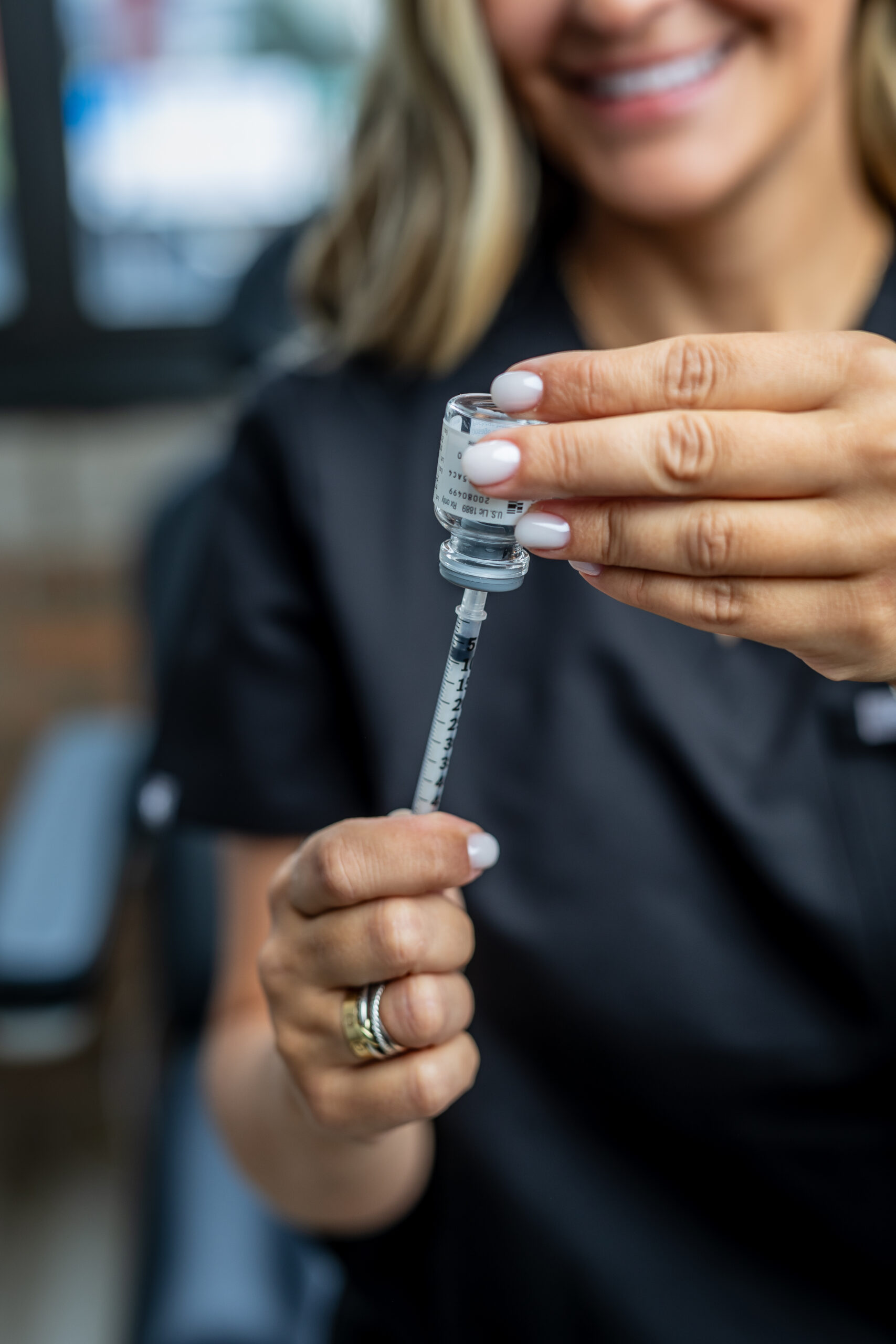
The word "peptides" has become something of a wellness buzzword — appearing simultaneously in anti-aging serums, athletic recovery protocols, gut health forums, and longevity medicine practices. The range is wide enough that it is reasonable to wonder whether anything is actually substantiated, or whether this is another category of expensive hope.
The answer is: both, depending on which peptide you are talking about and what you are trying to do with it. The field is genuinely promising, the research base is growing, and the clinical applications are specific enough that "peptides" as a category tells you almost nothing — the detail is in the molecule.
Here is a grounded guide to the peptides we use and why.
What Is a Peptide?
A peptide is a short chain of amino acids — the same building blocks as proteins, just assembled in a shorter sequence. Your body produces thousands of peptides naturally; many of them function as signaling molecules, instructing cells to repair, regenerate, produce specific proteins, or modulate immune responses. When we administer therapeutic peptides, we are amplifying or restoring specific biological signals — not introducing foreign chemistry.
This is a meaningful distinction. Many peptides are bioidentical to sequences your body already produces. The side effect profile and therapeutic index tend to be favorable compared to synthetic drugs that work through entirely novel mechanisms.
BPC-157: The Healing Peptide
BPC-157 (Body Protection Compound 157) is a 15-amino-acid peptide derived from a protein found in gastric juice. It is one of the most extensively studied peptides in animal models, with documented effects across an impressive range of tissue types.
Wound healing and musculoskeletal repair: BPC-157 accelerates healing of tendons, ligaments, muscle, and bone in animal studies — consistently outperforming controls on healing time, tensile strength recovery, and inflammatory resolution. The mechanism involves upregulation of growth hormone receptors in tendon fibroblasts and promotion of angiogenesis (new blood vessel formation) in injured tissue. For athletes dealing with chronic tendinopathy, partial tears, or post-surgical recovery, this is the peptide most commonly used in clinical practice.
Gut and GI tract: BPC-157 was originally studied for gastric ulcer healing, and the GI evidence is among the strongest in the literature. It promotes healing of the intestinal epithelium, reduces intestinal permeability (the mechanism underlying "leaky gut"), and modulates the enteric nervous system. Patients with IBD, IBS, or post-antibiotic gut dysbiosis are candidates for BPC-157 protocols.
Neurological and systemic effects: Emerging research suggests BPC-157 may also support dopaminergic and serotonergic function, with potential relevance for mood, cognitive recovery, and post-concussion protocols. This area is less mature but clinically interesting.
BPC-157 is administered subcutaneously or orally (for gut-focused applications). It has no reported serious adverse effects in human use, though it remains a research compound without FDA approval — something patients should understand clearly before starting a protocol.
TB-500 (Thymosin Beta-4): Tissue Repair and Inflammation
Thymosin Beta-4 is a naturally occurring protein found in virtually all human tissues. TB-500 is the synthetic fragment most commonly used therapeutically — specifically the Ac-SDKP sequence believed to be responsible for most of the biological activity.
Its primary mechanisms: promoting actin polymerization (necessary for cell migration and wound closure), reducing inflammation by modulating cytokine signaling, and stimulating new blood vessel and muscle fiber growth. In practice, TB-500 is most commonly used for:
- Chronic injury recovery — particularly tendons and ligaments that have not responded to conventional physical therapy
- Reducing systemic inflammation in athletes with high training loads
- Post-surgical tissue repair
- Combination protocols with BPC-157 for enhanced musculoskeletal healing
The BPC-157 + TB-500 stack is sometimes called the "healing stack" in performance medicine — the two peptides have complementary mechanisms, and there is clinical rationale for using them together.
Sermorelin and CJC-1295/Ipamorelin: Growth Hormone Optimization
Growth hormone (GH) declines significantly with age — by age 40, most adults produce roughly half the GH they did at 20. The consequences include reduced muscle mass, increased visceral fat, slower recovery, poor sleep quality, and declining skin thickness and collagen content.
Rather than administering exogenous human growth hormone (which carries its own regulatory and side-effect considerations), growth hormone secretagogue peptides stimulate the pituitary gland to produce more of its own GH. This is a more physiological approach — the body's own feedback mechanisms remain intact.
Sermorelin is a GHRH (growth hormone releasing hormone) analogue — it signals the pituitary to release GH in the normal pulsatile pattern. It is FDA-approved for pediatric growth hormone deficiency and is commonly used off-label in adults for age-related GH decline.
CJC-1295 + Ipamorelin is a commonly combined protocol: CJC-1295 extends the half-life of the GHRH signal, while Ipamorelin (a GHRP — growth hormone releasing peptide) adds a complementary stimulus through the ghrelin receptor. Together they produce a more robust and sustained GH pulse than either alone.
Clinical applications: improved body composition (lean mass increase, fat reduction), better sleep quality (GH is predominantly released during slow-wave sleep), enhanced recovery, improved skin thickness and elasticity. These are systemic effects — this is not a topical or targeted treatment, but a whole-body optimization protocol.
GHK-Cu: Collagen, Skin, and Cellular Repair
GHK-Cu (glycyl-L-histidyl-L-lysine copper complex) is a naturally occurring copper peptide found in human plasma, saliva, and urine. Its concentrations decline with age — from approximately 200ng/mL at age 20 to 80ng/mL by age 60 — correlating with the decline in skin repair capacity and wound healing speed observed over the same period.
GHK-Cu is one of the most studied peptides in skin science. Demonstrated effects include:
- Stimulation of collagen and elastin synthesis
- Upregulation of antioxidant enzyme systems (superoxide dismutase, catalase)
- Promotion of angiogenesis and nerve outgrowth in wound healing
- Anti-inflammatory and immunomodulatory activity
- Regulation of over 4,000 genes involved in tissue repair and regeneration (genome array studies)
GHK-Cu is used both topically (in cosmeceutical formulations) and systemically (subcutaneous injection). Injectable protocols are used for skin quality improvement — fine lines, skin thickness, overall radiance — as well as systemic anti-aging applications. It complements aesthetic injectable treatments well and is a logical addition to a comprehensive skin protocol.
Who Is a Candidate for Peptide Therapy?
The honest answer is: many people, for different reasons. Peptide protocols are not reserved for elite athletes or extreme longevity devotees. The most common patients we see are:
- Active adults with chronic musculoskeletal injuries that have plateaued with conventional treatment
- Patients in their 40s or 50s experiencing GH-decline-related symptoms: fatigue, poor recovery, body composition shifts, declining sleep quality
- Patients focused on comprehensive skin quality improvement beyond surface treatments
- Post-surgical patients wanting to optimize healing timelines
- Patients with GI symptoms consistent with intestinal permeability or inflammatory bowel conditions
Peptide therapy is not a substitute for foundational health practices. Sleep, nutrition, exercise, and hormonal balance are the foundation — peptides are an optimization layer on top. We do not prescribe peptides as a shortcut around lifestyle; we use them to accelerate progress in patients who have already built that foundation.
A Note on Quality and Sourcing
Peptide quality varies enormously, and this is not an area where "good enough" is acceptable. Peptides sourced from unverified compounding pharmacies or research chemical suppliers may be underdosed, contaminated, or incorrectly synthesized. At TRIA, we work exclusively with FDA-registered, USP-compliant compounding pharmacies whose products are third-party tested for purity and potency.
If you are already using peptides sourced elsewhere, it is worth having an honest conversation about what you are actually taking.
Starting a Protocol
Peptide therapy at TRIA begins with a clinical evaluation: symptom review, relevant labs (IGF-1 for GH optimization protocols, inflammatory markers, baseline metabolic panel), and a frank discussion of what you are trying to achieve and over what timeline. We then build a protocol that makes sense for your specific goals — not a one-size menu of the most popular compounds.
If you are curious about whether peptide therapy is appropriate for your situation, a consultation is the right starting point. Book below, and we will figure out together what the evidence supports for you.