Botox vs. Dysport: What's the Difference and Which Is Right for You?
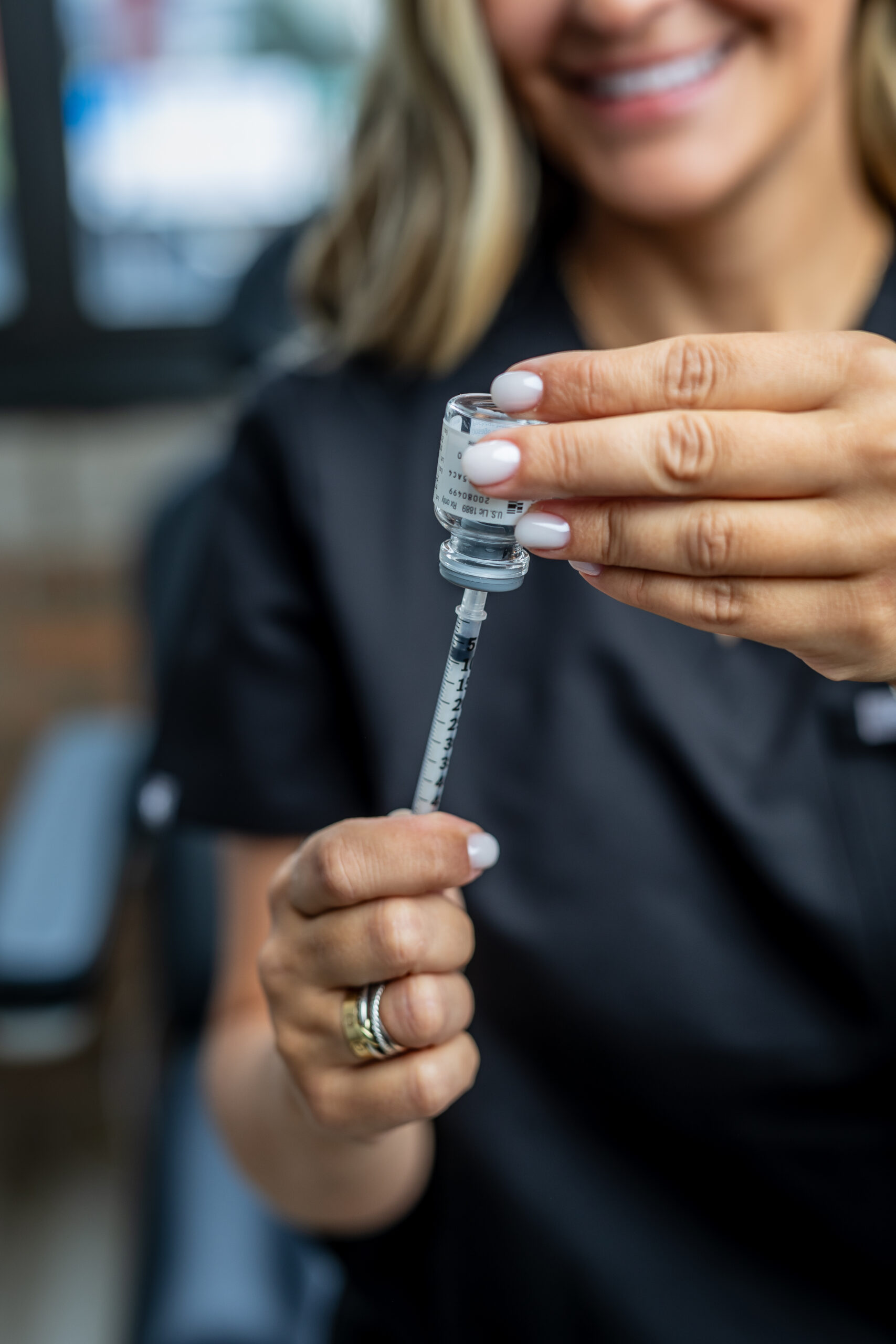
If you have ever asked your injector whether they use Botox or Dysport and received a shrug or a reflexive "we only carry one," that is worth paying attention to. A clinical practice with genuine expertise in neuromodulators should be comfortable with both — because they are not interchangeable, and the best result for your face may depend on choosing the right one.
Here is what you actually need to know.
They Work the Same Way — But They Are Not the Same Drug
Botox (onabotulinumtoxinA) and Dysport (abobotulinumtoxinA) are both botulinum toxin type A. They work by the same mechanism: blocking the release of acetylcholine at the neuromuscular junction, preventing the targeted muscle from contracting, and softening the dynamic lines that repeated contraction creates.
The difference is in the formulation. Dysport contains a smaller active protein complex than Botox, which affects two clinically meaningful properties: diffusion radius and onset speed. It also means the units are not equivalent — a common source of patient confusion and, occasionally, undertreated results when providers switch products without adjusting dose.
Onset: Dysport Is Faster
This is one of the most consistent findings in clinical literature and in clinical practice. Dysport typically shows visible results within 2–3 days post-treatment. Botox generally takes 4–7 days to reach full effect, with some patients waiting up to 10–14 days for peak result.
For most patients, this difference does not matter much. For someone treating before an event — a wedding, a reunion, a shoot — it absolutely does. Dysport is the more reliable choice if you need results on a shorter timeline.
Diffusion: Dysport Spreads More
Dysport diffuses over a slightly wider radius from the injection point than Botox does. This is neither good nor bad — it is a clinical variable that requires a skilled injector to work with intentionally.
In areas where diffusion is desirable — the forehead, which is a broad muscle requiring even coverage — Dysport can produce a more uniform result with fewer injection points. In areas where precision and containment are critical — around the lips, near the brow, in the lower face — tighter diffusion is an advantage, and Botox or a conservative Dysport dosing strategy may be preferred.
An injector who knows both products places Dysport where spread is an asset and Botox (or Xeomin, or Jeuveau) where containment matters. One-product practices cannot make that call.
Duration: Essentially Equivalent
Both Botox and Dysport last approximately 3–4 months in most patients, with variation based on the treated area, the dose, the individual's metabolism, and their history with neuromodulators. Patients who have been treated consistently for years often find their results last longer — the muscle becomes progressively less active over time.
There is no meaningful clinical evidence that one product reliably outlasts the other at equivalent therapeutic doses. Anyone telling you otherwise is selling a preference, not a data point.
Unit Conversion: This Is Where Mistakes Happen
Botox and Dysport units are not the same. The general clinical conversion is approximately 1 unit of Botox = 2.5–3 units of Dysport, though this varies by area and by injector technique. A patient who has been treated with 20 units of Botox in the forehead should not expect the same result from 20 units of Dysport — they would need approximately 50–60 units of Dysport to achieve a comparable effect.
This is a common source of patient frustration when switching products or providers. If your new injector quotes you a dramatically lower unit count than you are used to and you are switching from Botox to Dysport, ask specifically about their conversion logic before proceeding.
Which Is Right for You?
The honest answer is that it depends on the area being treated, your timeline, and your response history. At TRIA, we carry both and make the choice based on what will serve your anatomy and your goals best — not on what we ordered more of that month.
Some general guidance:
- For forehead and glabella (11s): Either works well; Dysport can provide slightly more even distribution in the forehead with fewer injection points.
- For crow's feet: Both are effective; Botox's tighter diffusion can be an advantage near the orbital rim.
- For event timing: Dysport if you need results in under a week.
- For first-time patients: Either is appropriate; your injector's familiarity and comfort with a given product matters more than the product itself.
- For lower face / lip lines / brow sculpting: Precision matters more than diffusion; discuss specifics with your provider.
The most important variable in any neuromodulator treatment is not the brand on the vial. It is the anatomical knowledge, injection technique, and aesthetic judgment of the person holding the syringe. A skilled injector producing results you love with Botox is a better choice than switching to Dysport with someone whose work you are less confident in.
Curious Which Is Right for You?
If you are coming in for a consultation at TRIA — whether as a new patient or to revisit your current protocol — this is exactly the kind of conversation we have in the room. We assess your anatomy, your history, your timeline, and your goals, and we make a recommendation based on all of it. Book a consultation below, and we will figure it out together.